
Fuli,
a Transmedia Narrative
An illustrated children’s storybook, written and illustrated end-to-end, about a lonely girl who wishes on a falling star for a little brother — and gets one, in the shape of a small tin robot. Built as the first chapter of a larger transmedia story world, conceived to grow from page to screen.
Project Overview
Fuli began as a coursework brief for Illustration for Communication — write and illustrate a short book for children — but it grew into something more personal: a first attempt at building a story world of my own, one meant to eventually outgrow the page. The book is designed as a self-contained opening chapter, with its tone, cast and central image (a falling star, a tin come to life) built to carry into future formats: a short animated film, then, further out, a longer transmedia series that follows Fuli and her new brother, Abdul.
A Wish on a Falling Star
Fuli is a young girl living in a cramped tin-roofed home in the city. A complication at her own birth means her parents will never have another child — and her father, Rustom, still carrying that grief, has never forgiven her for it. When he comes home short-tempered, Fuli’s first instinct is to hide under the bed; when he corners her, it’s her mother who steps between them, and Fuli who pushes past them both and runs.
She ends up where she always ends up when things go wrong: on the corrugated tin roof, watching the moon over a city that feels to her like “an ocean of junk behind a wall.” Alone under the stars, she makes the same wish she always makes — for a little brother of her own. That night, a star falls. Fuli wakes at dawn to find an old powdered-milk tin sitting in her lap — and as she turns it over in her hands, it stirs, sprouts two small arms and legs, and speaks: “Hello, Fuli Apu. I’m your little brother, Abdul.”
Cast
From the Book
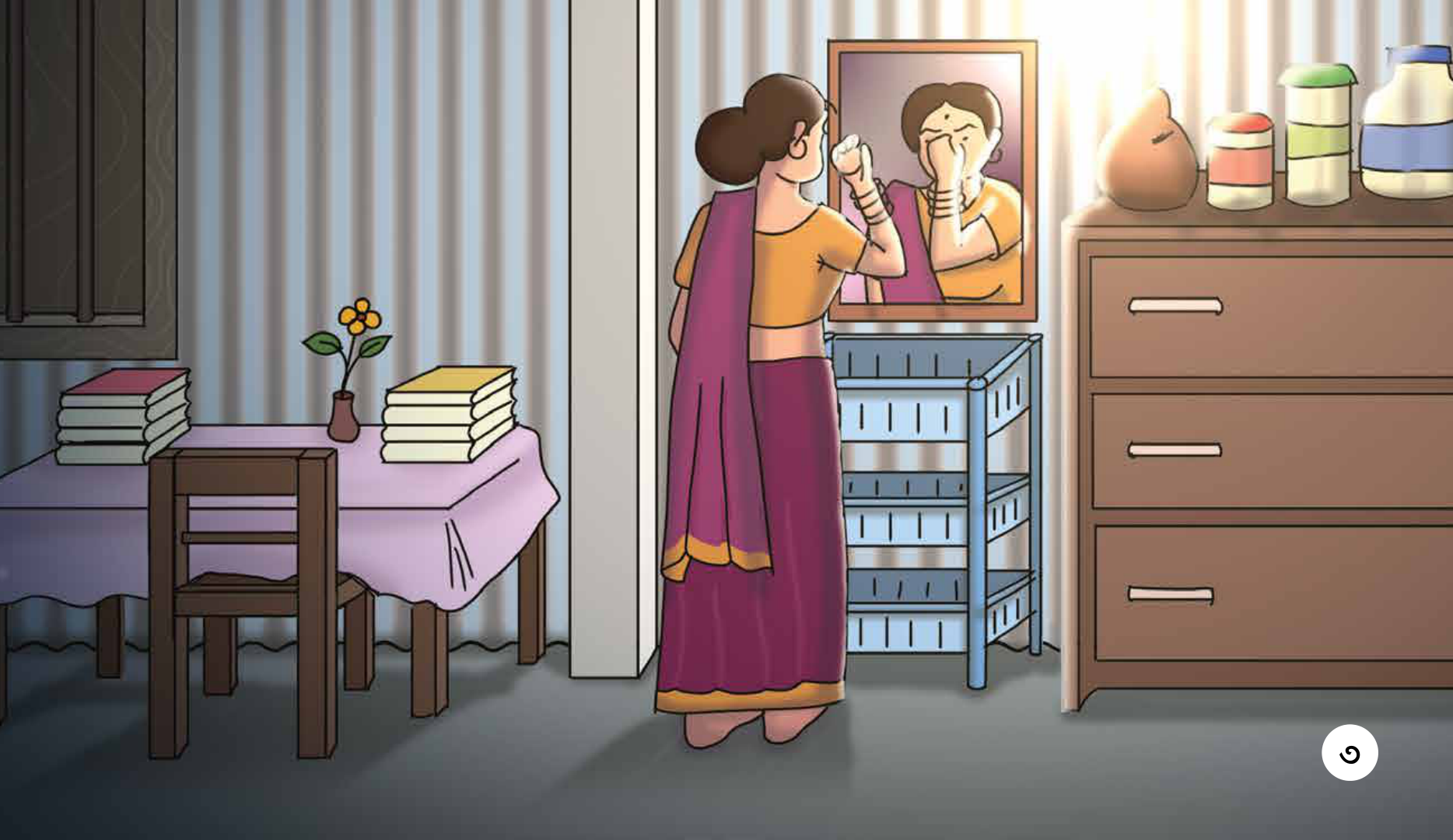



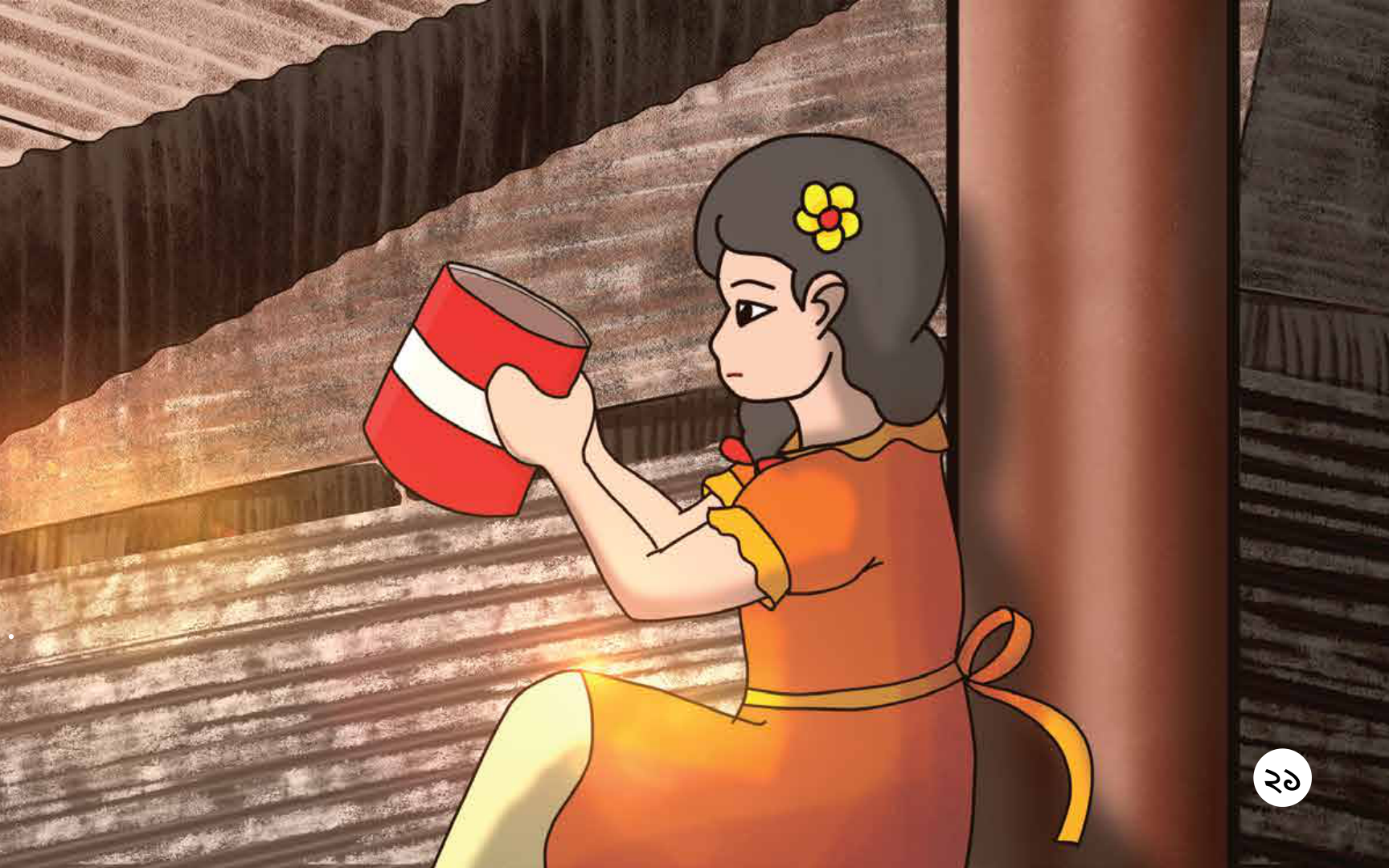

Building the Cast
Every character started life as a rough pencil study in a sketchbook, alongside a small ensemble of names that never made it into this first chapter — Rufsun, Mooti Chacha, Maya — kept on hand as the wider neighbourhood this story world eventually grows into. Fuli’s own immediate family — Rustam (her father), Fuli, and Abdul — were then taken through full turnarounds: proportion studies first, then a front/three-quarter/side/back model sheet, then colour. The model sheets exist so the same characters can be redrawn consistently across a 14-page book — or, later, rebuilt as 3D models without guesswork.
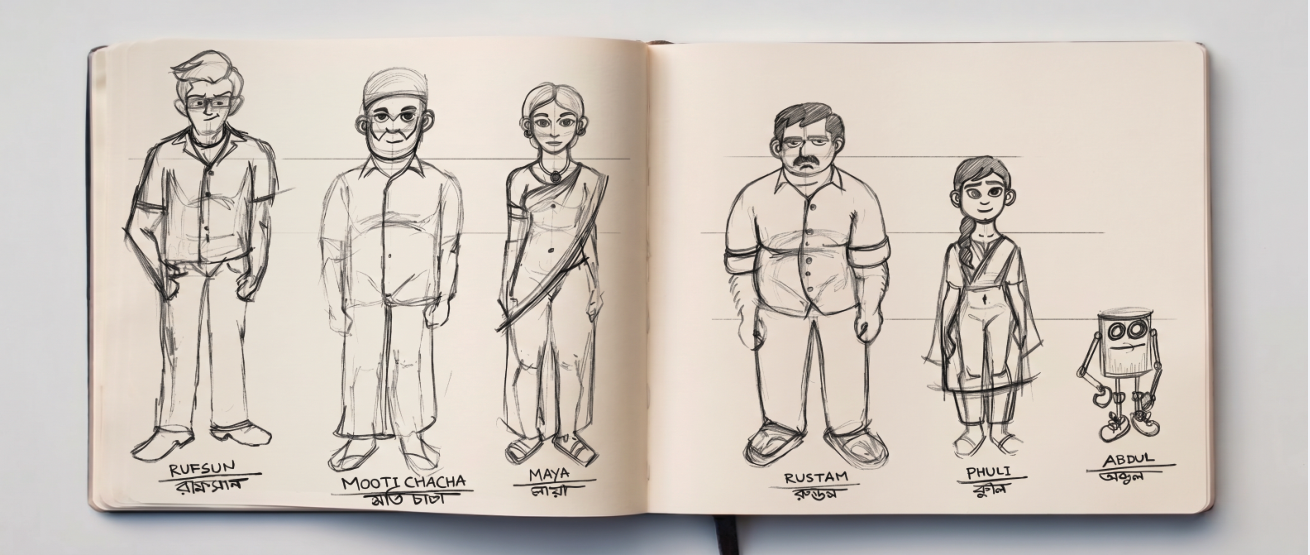
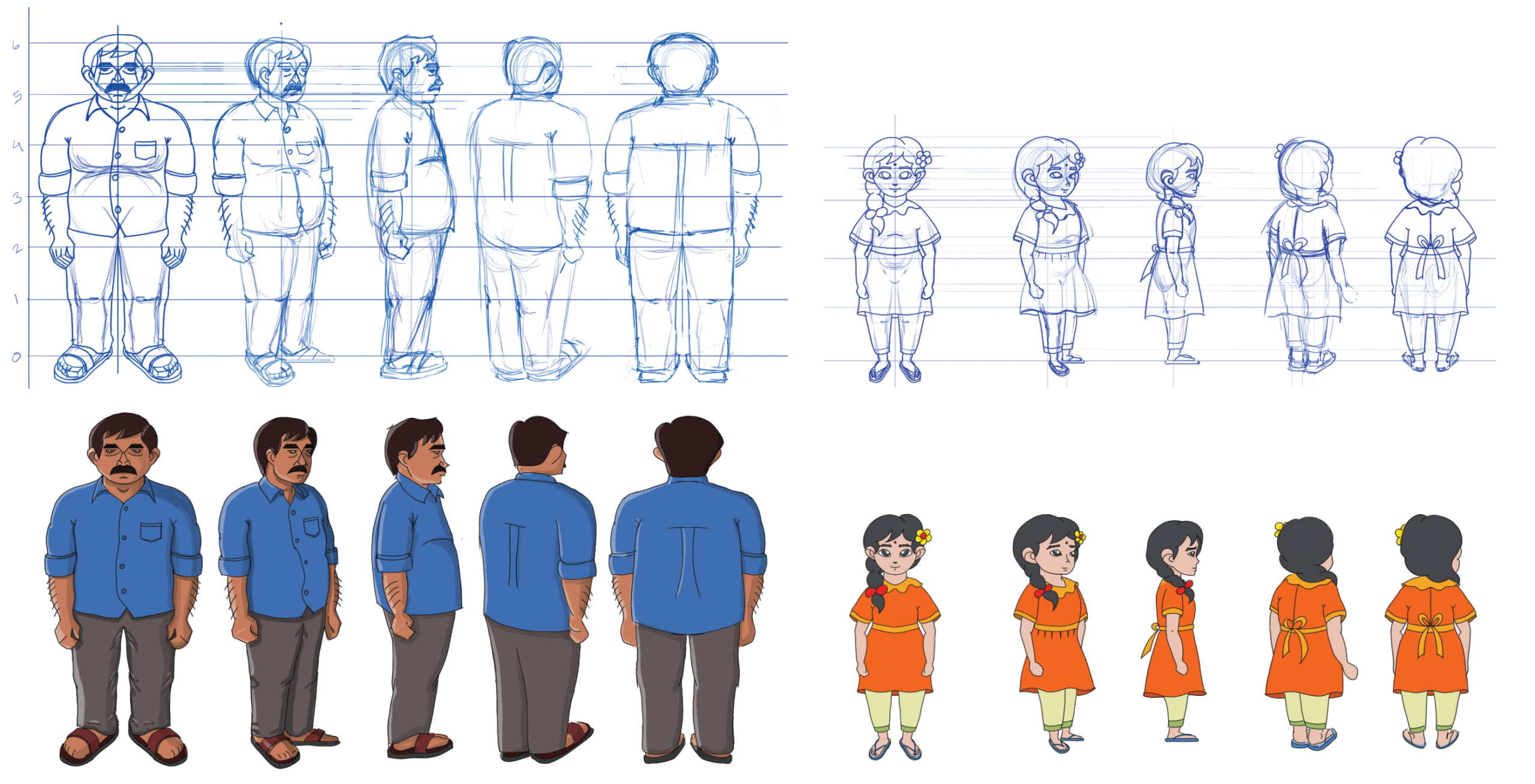
Approach
A Transmedia Roadmap
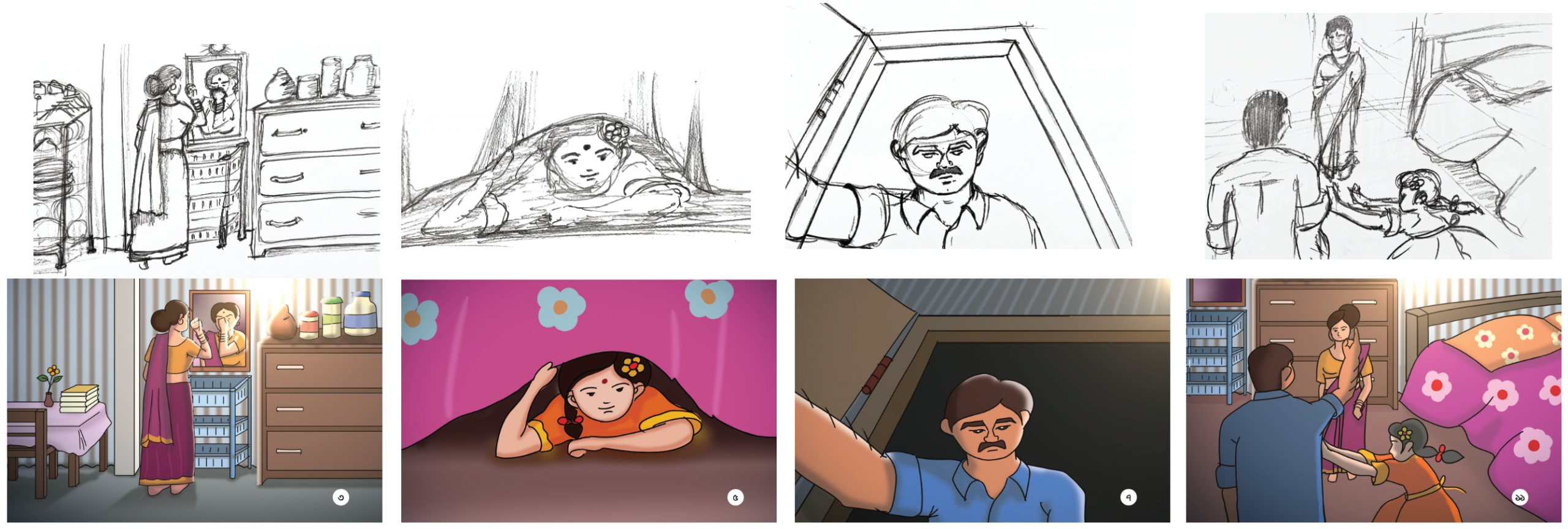
The project began as the 14-page picture book shown above: character development, environment design, sequential storytelling and print-ready illustration, developed as MA coursework. This phase set the visual language, palette and narrative tone the rest of the project builds on.
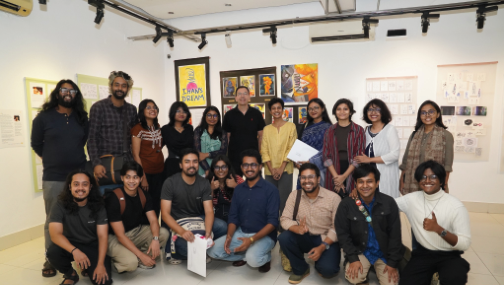
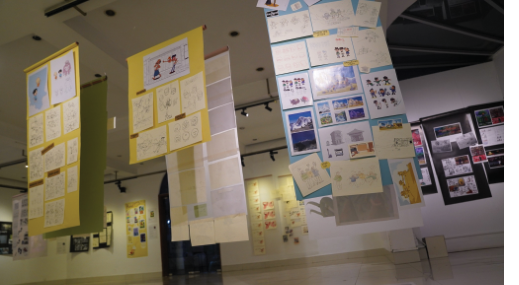
During an animation pre-production workshop at Alliance Française de Dhaka, a segment of Fuli was adapted into a short animated concept — one of 22 stories selected for the programme. The workshop introduced cinematic pacing, shot-level storyboarding and temporal (rather than page-by-page) storytelling, and the resulting concept was shown at a group exhibition, moving Fuli from a private reading experience to a public one.
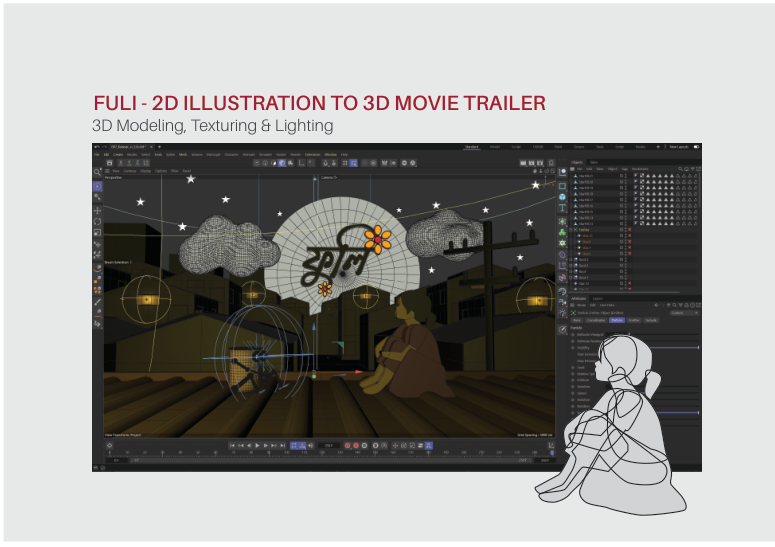
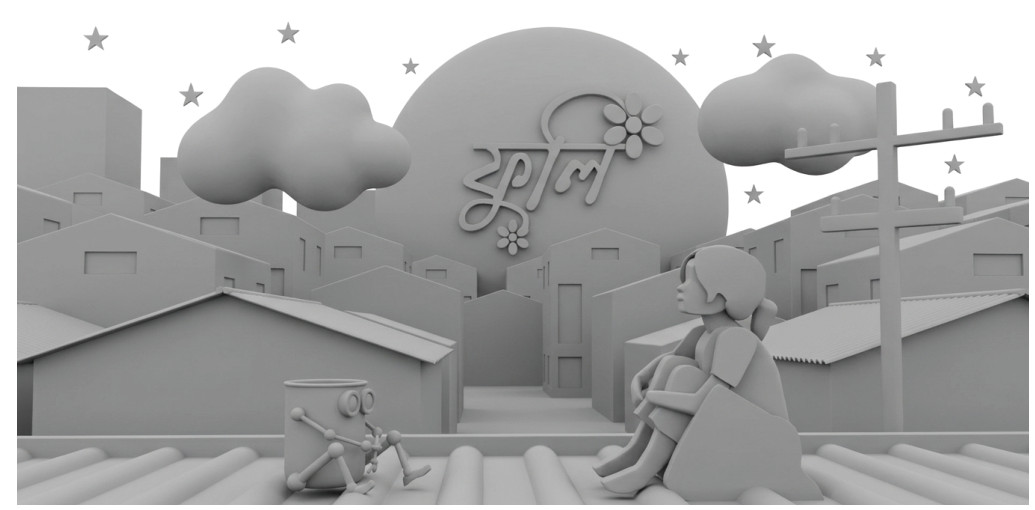
The full version of Fuli is scheduled for publication in 2027 in Bangladesh. Alongside print, the story is being developed toward a full-length hybrid feature film — 2D illustration carried into 3D space, an approach that’s only become practical at this scale because AI-assisted tooling now makes complex 3D modeling, texturing and lighting achievable for a small, one-person production. The same rooftop spread shown earlier in this book has already been rebuilt once, in 3D, as an early test of that pipeline.
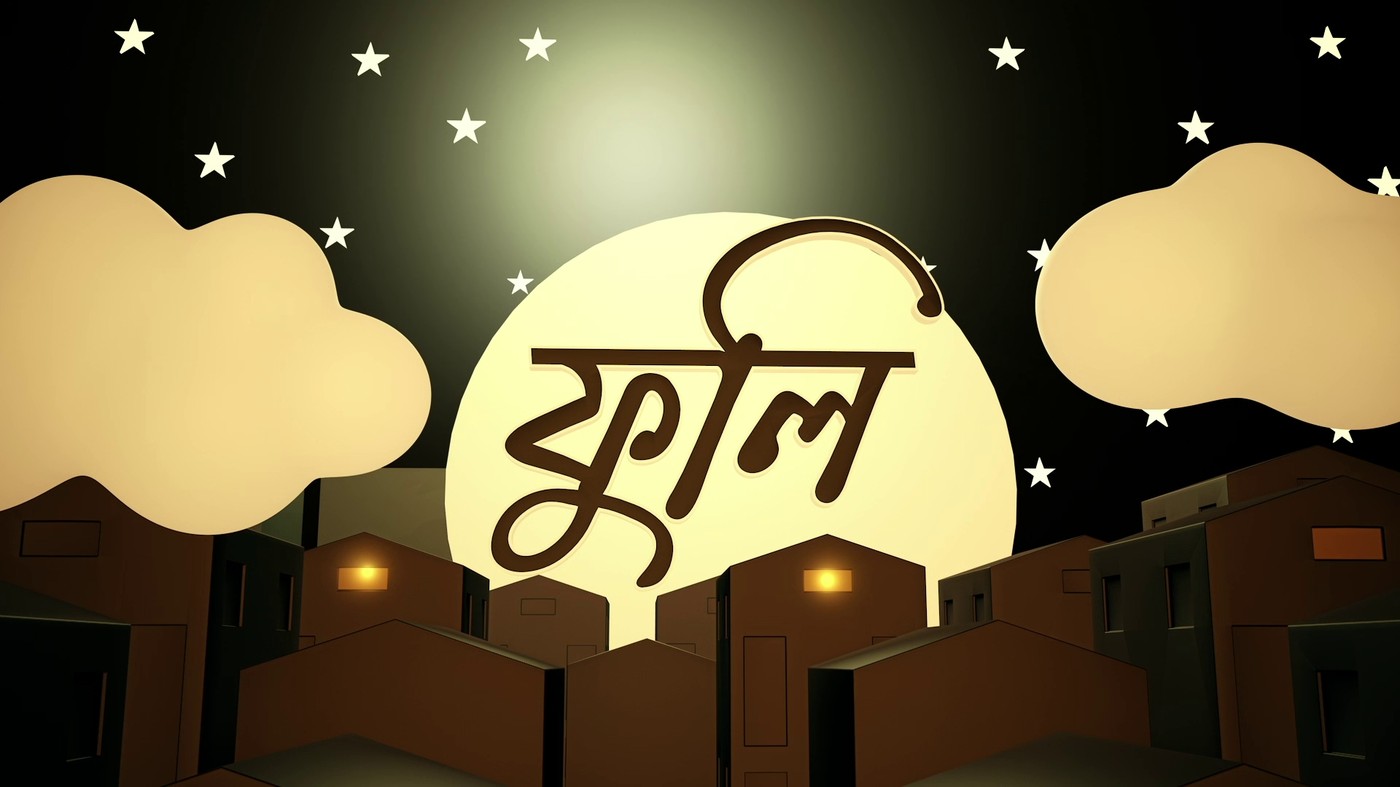
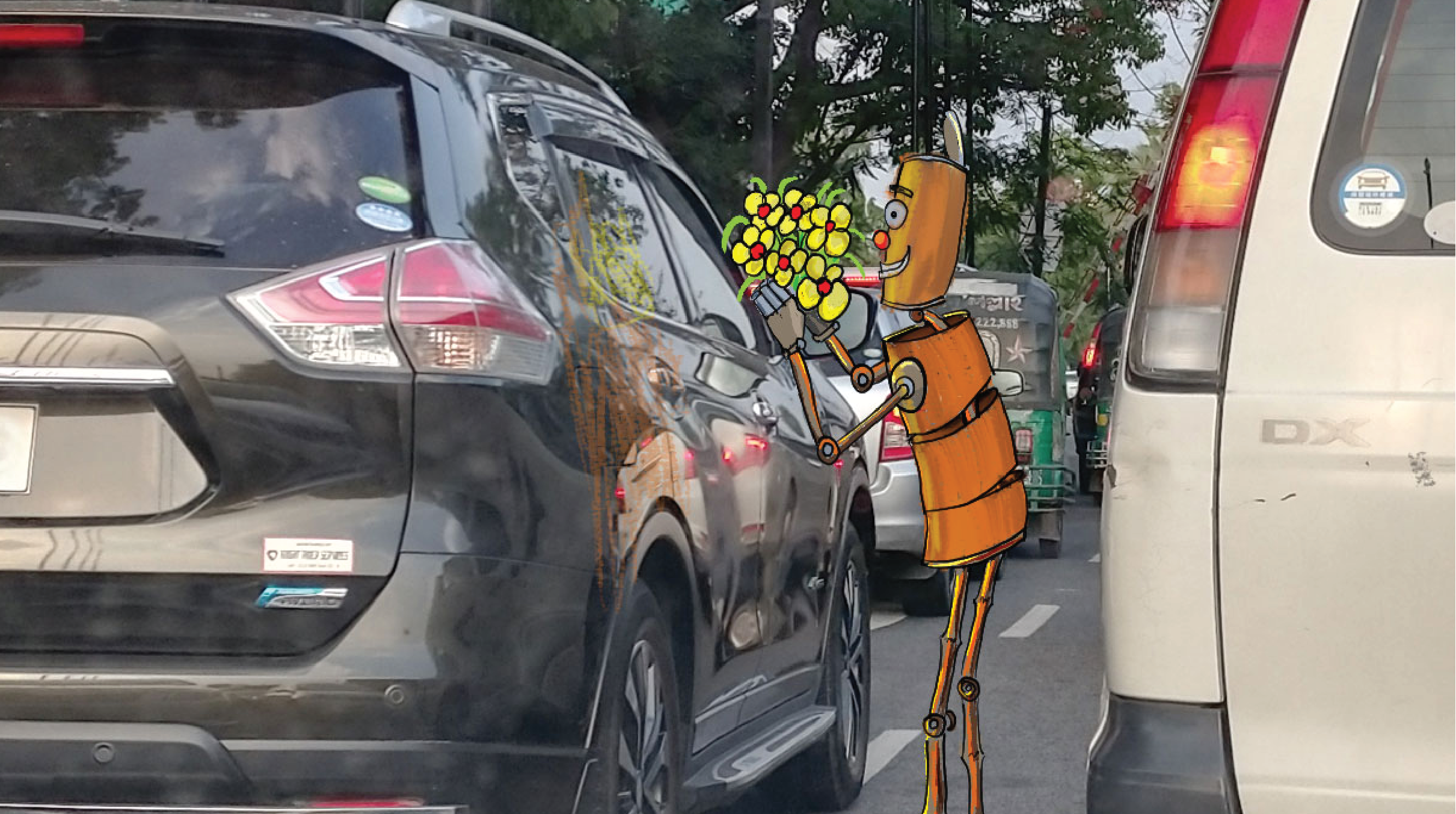
Abdul is also being tested as a character in his own right, beyond the page and the render — composited into real photography as an early look at how he might carry into live-action-adjacent promotion for the feature.

Read Fuli, Cover to Cover
The complete illustrated book, in the original Bangla — story and illustration by Abu Saleh Mohammad Kawsar, for the course Illustration for Communication (ILL5204), Shanto-Mariam University of Creative Technology.
(0)