Reviving Heritage: Panam City

ASM KAWSAR/ MA Coursework / Cultural Heritage Study
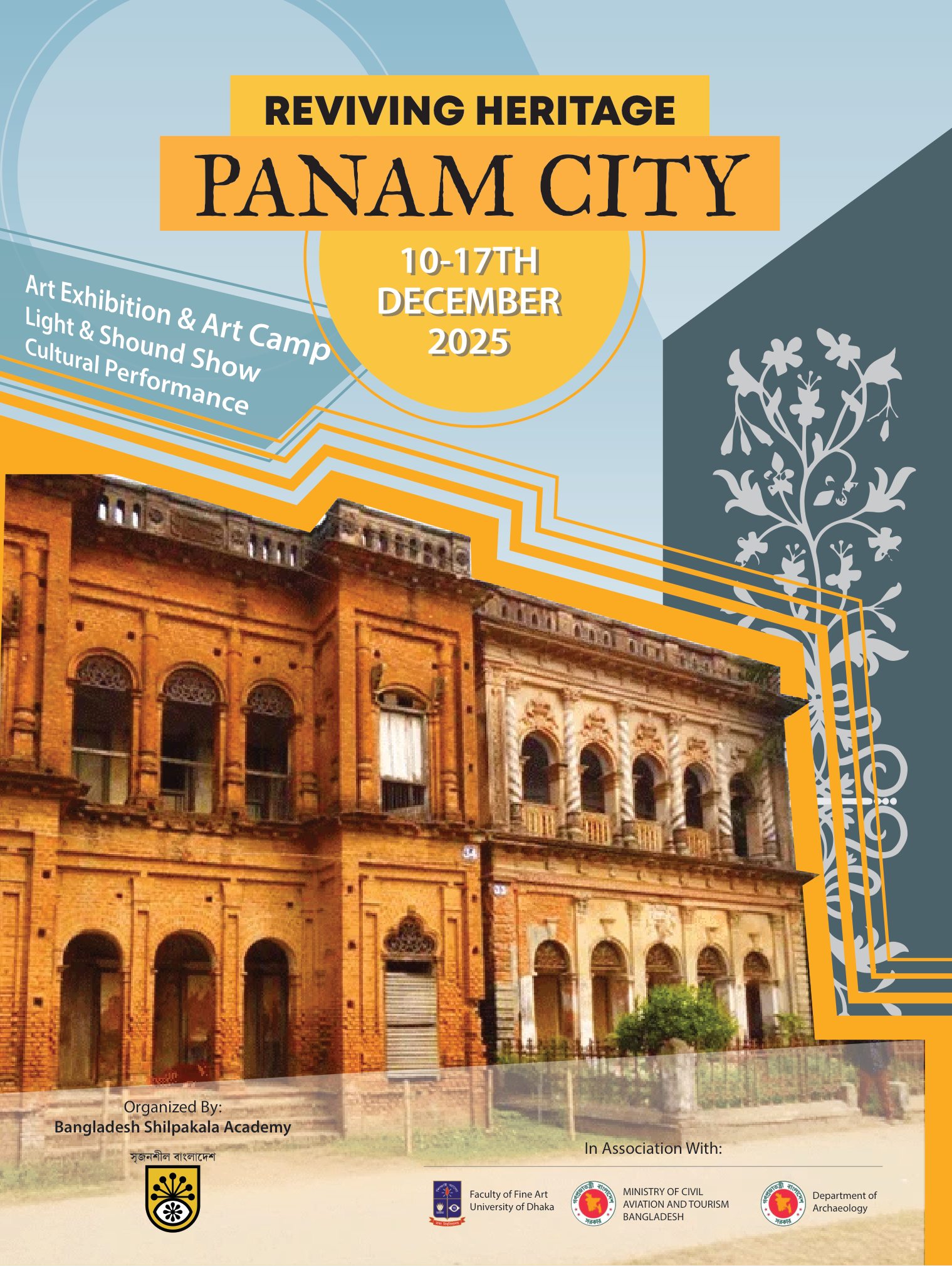
Reviving Heritage — Panam City poster
MA Coursework · Cultural Heritage Study

Reviving Heritage:
Panam City

A cultural-heritage event poster for a live exhibition at Panam Nagar, Sonargaon — an art exhibition, light & sound show and cultural performance organized by the Bangladesh Shilpakala Academy. The brief: explore how graphic systems can communicate heritage in a contemporary context, without leaning on nostalgia. Backed by a field study conducted on site.

Courses
Contemporary Graphic Design; ART-6201, Folk & Traditional Culture of Bangladesh
Instructors
Assoc. Prof. Md. Harun-ar-Rashid; Prof. Dr. Md. Mahbub Hossain
Venue
Panam Nagar, Sonargaon · Organized by Bangladesh Shilpakala Academy

Project Overview

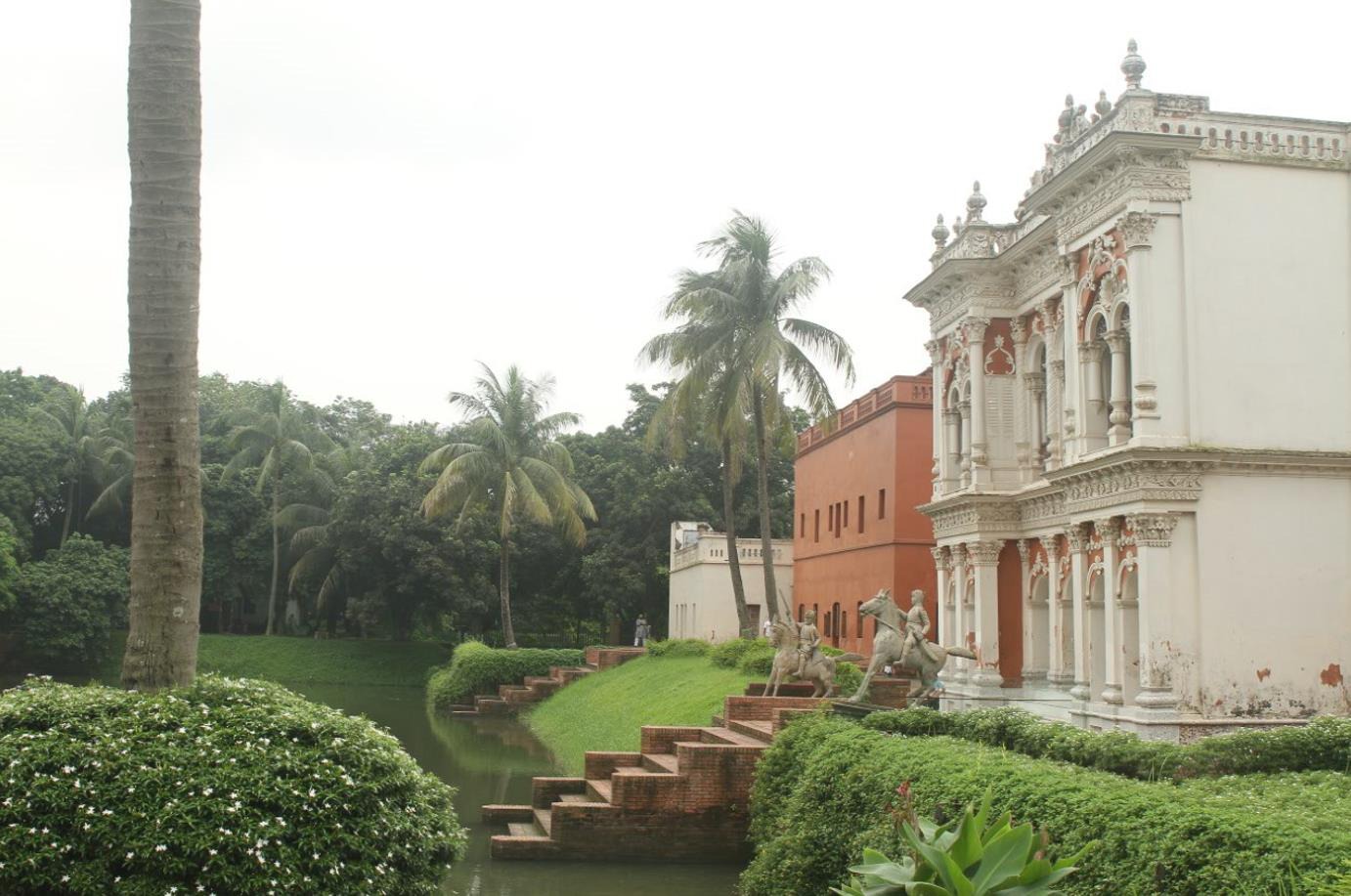
This poster was designed to explore how graphic systems can communicate cultural heritage in a contemporary context. Using Panam City as the central subject, the project examines how architectural history can be visually framed without romanticizing the past. A documentary photograph of the Panam Nagar façade is set against a restrained geometric system — circle, line and rectangle — so the building’s own ornament (the arched windows, the brick colonnade) carries the history, while the graphic layer stays contemporary and legible from a distance.

Field Study · ART-6201, Folk & Traditional Culture of Bangladesh

The Site: Sonargaon & Panam Nagar

Sonargaon — from Suvarnagrama, “the Golden Village” — was once the capital and river port of eastern Bengal, world-famous for the impossibly fine cotton cloth called Muslin, woven from a rare cotton called Phuti Karpas along the Meghna River. In the 16th century its chief, Isa Khan, took the title Masnad-i-Ala and ruled the Bhati region from here, resisting the Mughal Empire.

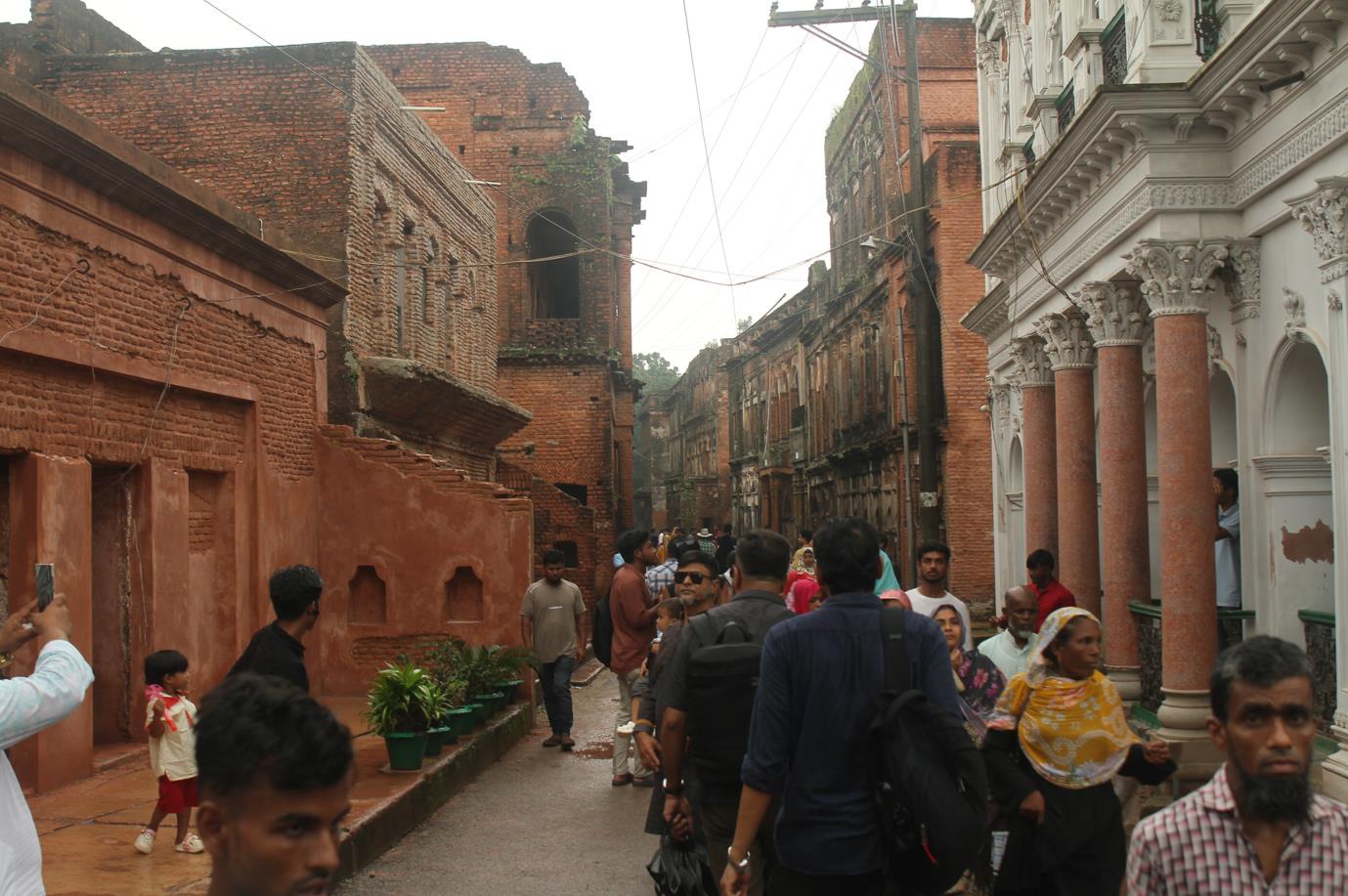
Panam Nagar itself is younger: a merchant town built by wealthy Hindu cloth traders and talukdars during the 19th-century British period, financed through the East India Company’s dadni advance-payment system. Around 1,400 weaving families once lived in and around it. After the 1947 Partition, the 1964 riots and the 1965 India–Pakistan war, its merchants left for India — and never returned. What remains is a single 600-metre street of 52 surviving houses, a genuine “ghost city,” now under the care of the Department of Archaeology.

Fast Facts

LocationSonargaon, Narayanganj
EtymologySuvarnagrama, “Golden Village”
Built19th century
Street length~600m × 5m wide
Houses surviving52 (31 north, 21 south)
StyleMughal + European mix
Status todayAbandoned, under conservation
Nearby museumEst. 1975 by Zainul Abedin
On Site · Tour Photography

Field Study — On Site

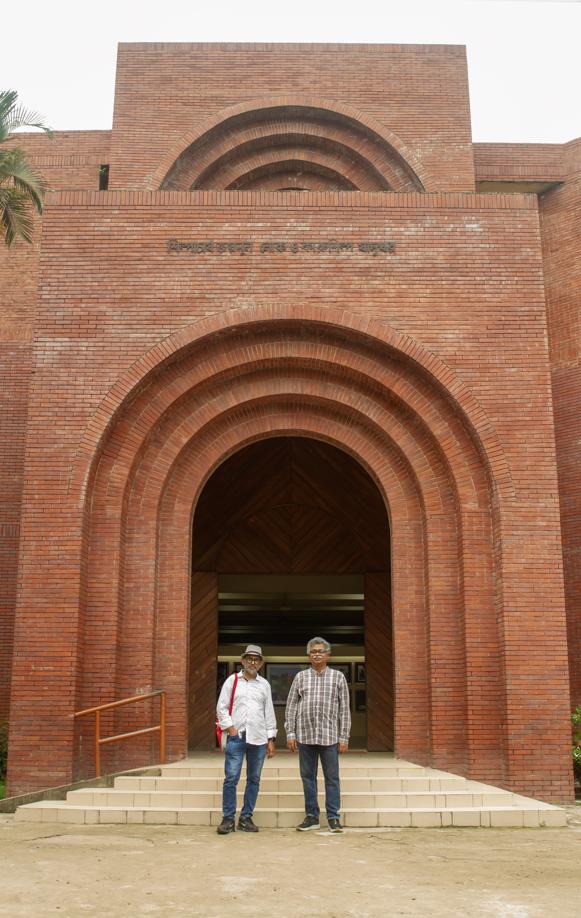
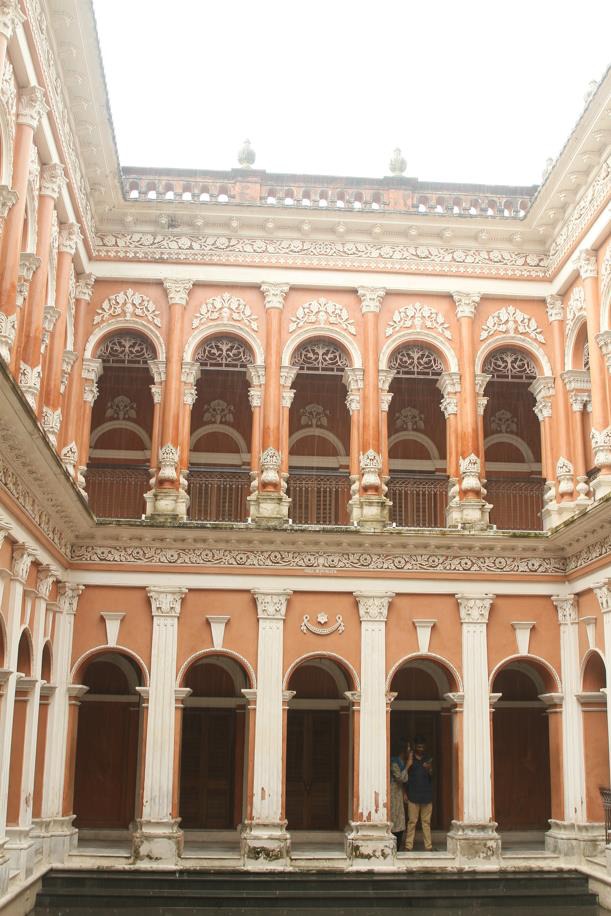
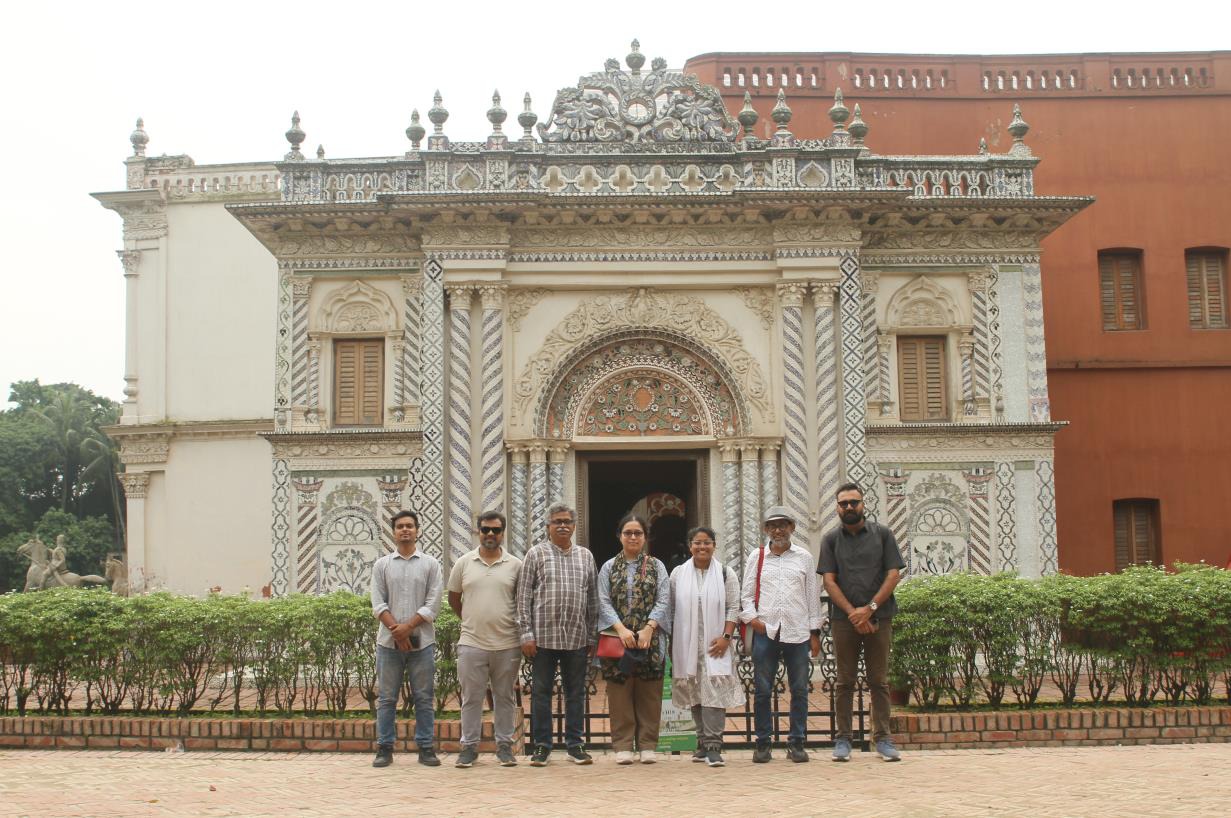
Boro Sardar Bari Museum entrance archway Ornate courtyard The street of Panam Nagar Our group in front of Boro Sardar Bari
Inside the Folk-Art Museum
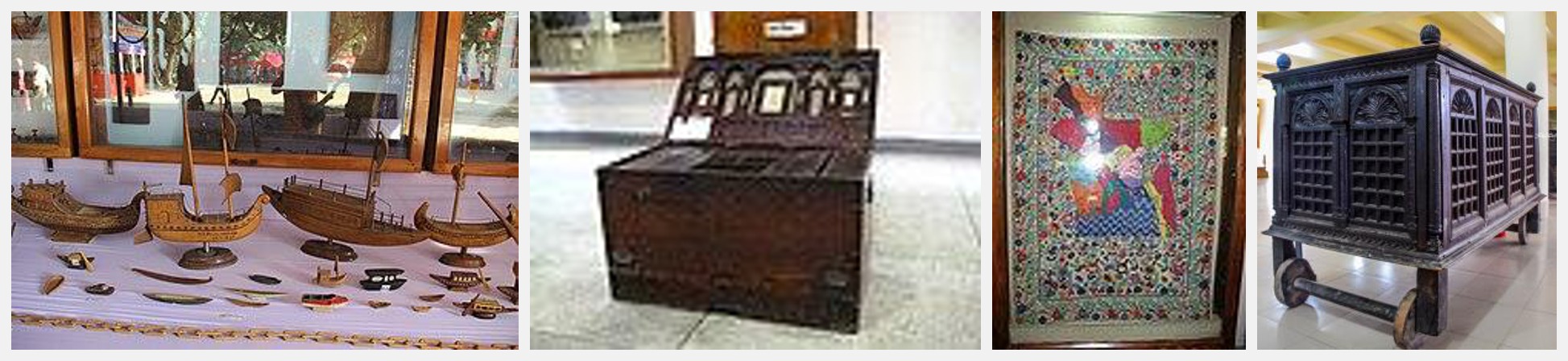
Folk artifacts on display — riverboat models, an antique chest, a Nakshi Kantha embroidered quilt, an old wooden almirah
Riverboat models, an antique chest, hand-stitched Nakshi Kantha, and carved wooden furniture — everyday objects that show the skill of Bengal’s rural artists. (Images collected from the internet.)
Design Thinking

Process

Motifs
Historical ornament, reduced to circle, line and rectangle
Historical floral motif reference, reduced to line
The vine-and-blossom motif carved into Panam Nagar’s façades became the starting point: traced down to its structural logic — a stem, radiating circles, a rhythm of lines — so it could sit comfortably beside the poster’s modern grid instead of competing with it.
Development
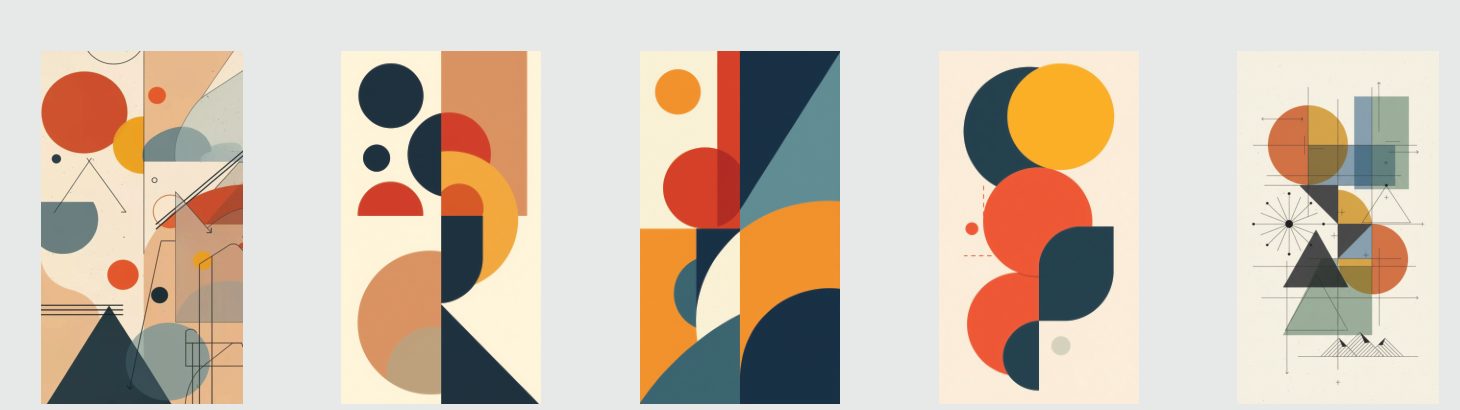
Basic geometric composition & additional development
Five geometric composition studies exploring layout, color and shape
Final Design Iterations
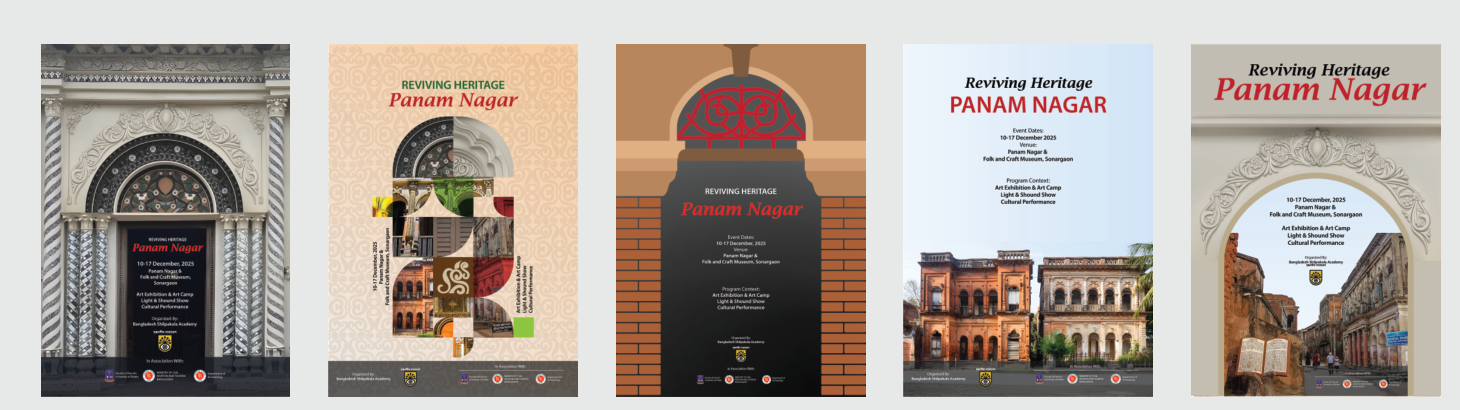
Testing the photograph against five different layout treatments
Five final poster layout iterations combining photography and typography
The selected direction (shown at the top of this page) kept the façade photograph large and undistorted, let the title system sit in flat color blocks rather than over the image, and used the traced motif — not the photograph — to carry the “heritage” feeling on the page.
Course Instructors
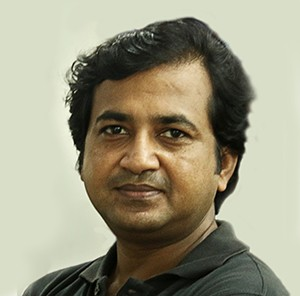
Md. Harun-ar-Rashid
Md. Harun-ar-Rashid
(Associate Professor & Chairman)
Department of Graphic Design
University of Dhaka
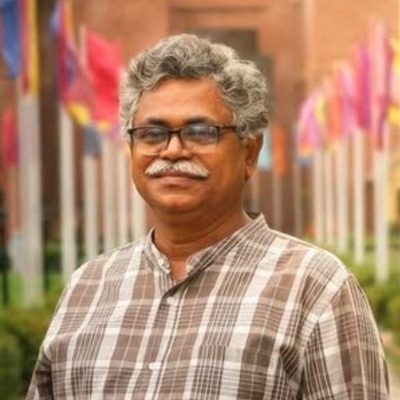
Dr. Md. Mahbub Hossain
(Professor)
Department of Bangla Language & Literature
Jatiya Kabi Kazi Nazrul Islam University
Written Research

The Full Field Study

“The Golden Legacy of Bengal” — the written assignment submitted for ART-6201: Folk & Traditional Culture of Bangladesh, covering Sonargaon’s golden era, the rise and fall of Panam Nagar, its architectural typology, and the folk culture preserved at the Sonargaon museum.

Course Instructor: Professor Dr. Md. Mahbub Hossain, Department of Bangla Language & Literature, Jatiya Kabi Kazi Nazrul Islam University.
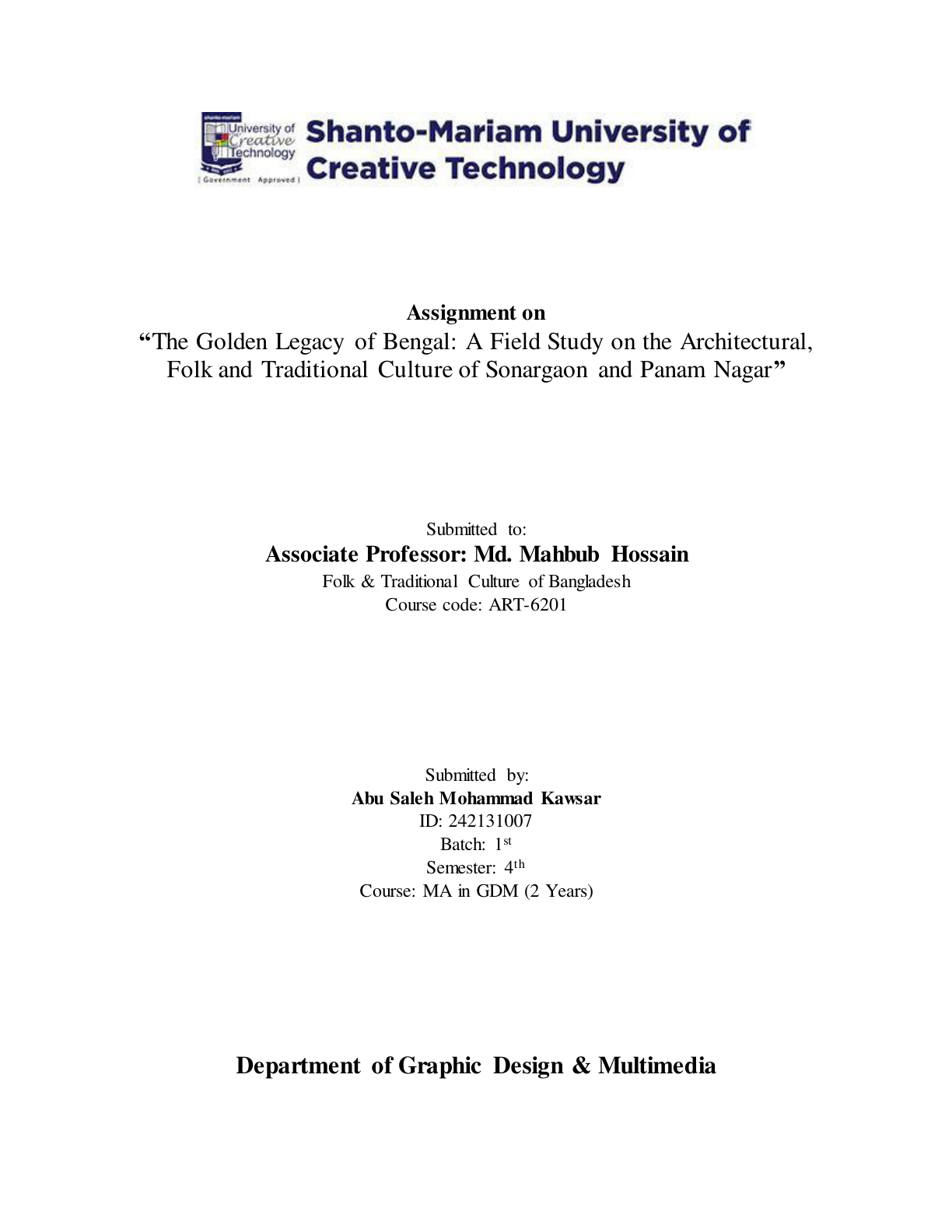
Assignment cover page
The Golden Legacy of Bengal
A Field Study on the Architectural, Folk & Traditional Culture of Sonargaon and Panam Nagar · 9 pages
Read Online

(0)